
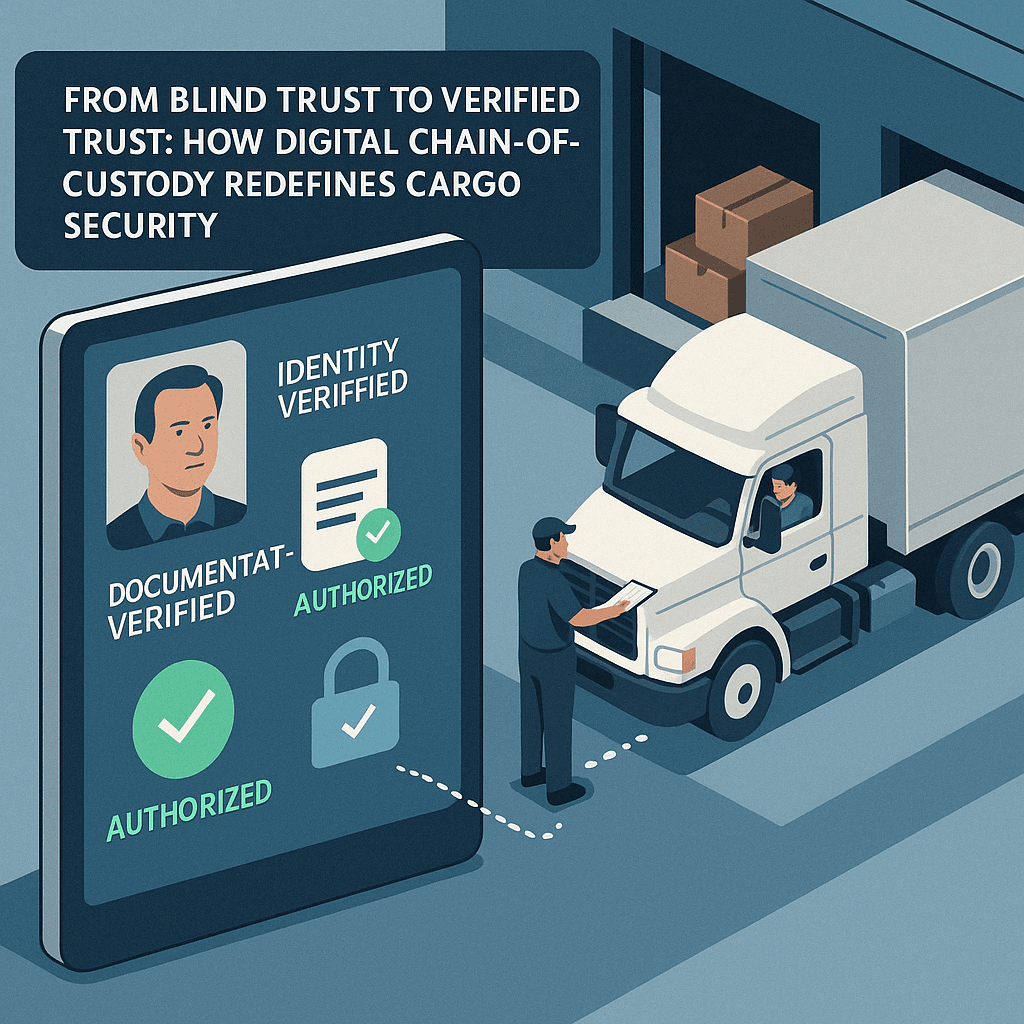
Blind Trust: Building Durability
In the shadowy corners of logistics operations, blind trust has become an operational liability that cargo thieves exploit daily. A truck arrives at your facility, documents appear legitimate, the driver seems authentic—but without robust verification, you're making a $100,000+ gamble. According to CargoNet, the average cargo theft loss value exceeded $172,000 in 2023, with professional theft rings impersonating legitimate carriers becoming increasingly sophisticated. The fundamental challenge? The logistics industry operates on an outdated trust model that criminal organizations have learned to manipulate with alarming precision.
The Operational Vulnerabilities in Traditional Trust Models
Here's how a typical sophisticated cargo theft plays out: Criminals identify a valuable load through freight boards or industry intelligence. They create shell companies that mirror legitimate carriers, complete with DOT numbers, insurance certificates, and corporate identities. The impersonator arrives at your facility with seemingly legitimate credentials and paperwork. Your receiving team, working under time pressure with limited verification tools, performs basic checks—perhaps calling a provided number (which routes to the thieves' operation) or visually inspecting documents. The driver leaves with your cargo, which disappears into a network of warehouses and distribution channels before you realize it was stolen. This theft technique, known as strategic cargo theft or fictitious pickup, succeeds because it exploits a critical gap: the inability to verify identity and authorization in real-time at the point of transfer.
Why Traditional Security Approaches Fail
Most existing cargo security approaches rely on fragmented, after-the-fact measures. Traditional methods include paper BOLs with signatures, driver's license checks against carrier documentation, or calls to dispatch to confirm pickup authorization. These methods fail because they're easily circumvented (forged documents, spoofed phone numbers), they're time-consuming (causing staff to take shortcuts during busy periods), and they lack integration with real-time verification systems. GPS tracking only helps after theft occurs, and the manual checking of credentials introduces human error and inconsistency while creating operational bottlenecks that pressure staff to bypass security protocols.
Real-World Impact of Digital Chain-of-Custody
Companies implementing Indemni's digital chain-of-custody system report remarkable operational improvements. A mid-sized consumer goods distributor reduced cargo theft incidents from five annually to zero after implementation, while simultaneously cutting loading dock dwell times. Critically, insurance providers could also begin offering premium discounts for shippers using verified digital chain-of-custody solutions, recognizing the dramatic risk reduction. The system also creates complete defensibility in claims situations, allowing you to not take liability in instances where you were not at fault.
Key Takeaways: Moving from Blind Trust to Verified Trust
Implement multi-layer verification: Replace single-point verification with Indemni's interconnected checks that validate identity, authorization, documentation, and cargo simultaneously.
Digitize your chain-of-custody: Eliminate paper-based processes that are easily forged and impossible to verify in real-time.
Train personnel on verification protocols: Ensure your team understands the verification steps and their importance to security.
Integrate verification into standard procedures: Make identity and authorization verification non-negotiable steps in your loading/unloading procedures.
Maintain continuous custody records: Use Indemni's platform to document every transfer point with immutable records that provide complete shipment visibility.
Ready to transform your cargo security from blind trust to verified trust? Book a demo to schedule a demonstration of how our digital chain-of-custody system can secure your supply chain against increasingly sophisticated cargo theft techniques.