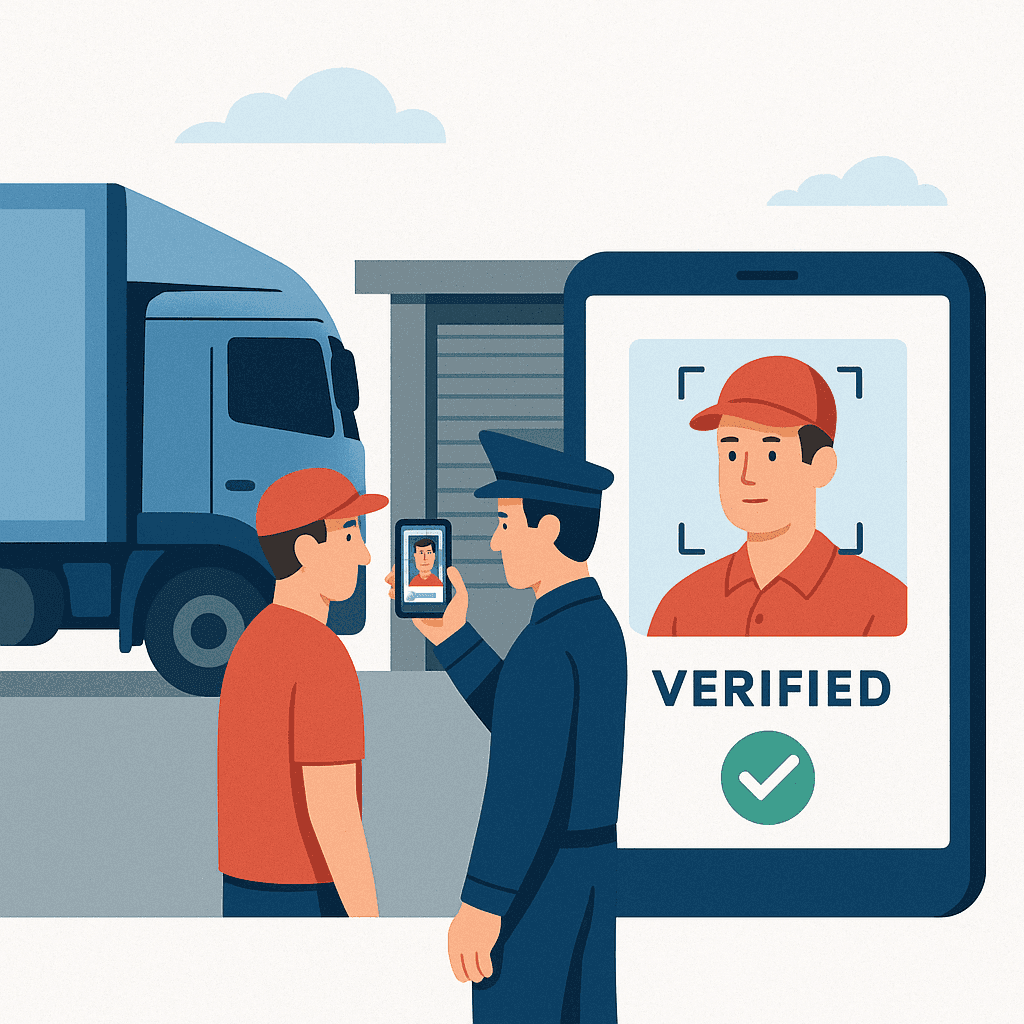
When a driver pulls up to your warehouse to collect a high-value shipment, do you know with absolute certainty who they are?
Many cargo thefts start with identity deception: criminals posing as legitimate carriers or using falsified credentials to gain access to freight. The thieves arrive with seemingly proper documentation, and your $100,000 shipment disappears into a criminal supply chain.
The fundamental vulnerability exists at that precise moment of transfer when verification often amounts to a cursory glance at easily forged documents.
The Operational Mechanics of Identity-Based Cargo Theft
Here is exactly how these thefts typically unfold. Criminals have industrialized the process of impersonation:
- Surveillance: Criminals monitor load boards for valuable shipments.
- The Shell Company: They create shell carriers with minimal verification (often just a $300 operating authority filing and basic insurance documents).
- The Approach: They arrive at pickup locations with forged BOLs, counterfeit company IDs, or simply claim to be a "new driver" for a legitimate carrier.
- The Handoff: Warehouse personnel, pressured by tight schedules and lacking proper tools, release the freight based on matching paperwork.
By the time the real carrier arrives or the theft is discovered, the cargo has been offloaded at a secondary location and is untraceable.
Why Traditional Verification Methods Fail
Current verification processes rely heavily on analog tools that create dangerous blind spots.
- Paper Credentials are Unreliable: Physical licenses and BOLs are easily forged with basic photo-editing software.
- Phone Verification is Flawed: Calls to dispatchers can be spoofed or routed to the thief’s accomplice.
- Database Gaps: Basic checks verify the company , but they do not verify that the specific person standing before you is the authorized driver for that specific load.
Even the FMCSA’s registry does not provide real-time verification of the individual driver, leaving your dock team to guess. See how Indemni catches fake photos
Actionable Steps to Enhance Your Cargo Security
- Audit Trust Points: Review your current process for moments where verification relies solely on paper documents or verbal confirmation.
- Implement Tiered Protocols: Establish stricter verification requirements based on cargo value. High-risk shipments should require biometric or digital validation.
- Train Warehouse Staff: Educate your team on specific identity theft tactics and how to spot behavioral red flags.
- Deploy Visual Verification: Use Indemni’s system at critical cargo transfer points to remove human error.
- Establish Failure Protocols: Define exactly what happens when verification fails. Does the gate lock? Who is notified?
Ready to stop cargo theft at the gate?
Schedule a Demo of Indemni’s visual verification system and see how easily it integrates with your existing operations.