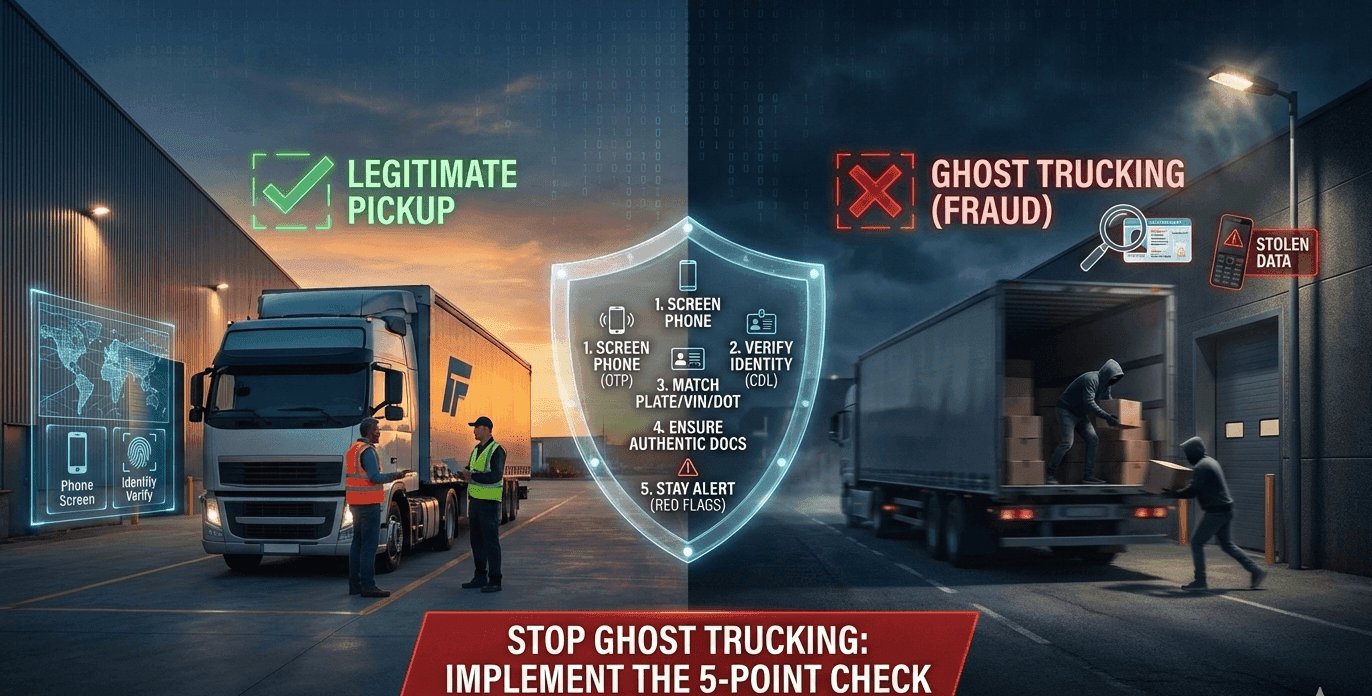
Fictitious pickups, often called "Ghost Trucking," represent a dangerous shift from physical theft to identity-based fraud. In this scenario, criminals use compromised carrier data to "ghost" the legitimate transportation provider, arriving at the facility early to claim the freight under false pretenses. By the time the real driver pulls into the dock, the cargo is already being offloaded at a criminal cross-dock. This type of strategic theft is particularly insidious because it weaponizes the speed of the industry against the broker, turning a standard booking into a massive financial liability.
You can’t afford to let speed compromise security; preventing a ghost truck requires an immediate, no-nonsense vetting process. Every load should undergo a five-point check:
- check the driver’s phone number against the FMCSA registry and separately confirm access to the phone with a one-time password (OTP)
- verify the driver’s identity and CDL with driver-level vetting
- match the license plate, VIN, and numbers of the MC/DOT, tractor, and trailer at the gate
- ensure the documents are authentic and the information matches your freight broker’s records
- stay alert for red flags like generic email addresses or brand-new authorities
A simple "call-back" to the carrier’s official number on file is sometimes the most powerful tool in your arsenal. Implementing these hard stops in your workflow ensures that your team identifies the fraud before the freight ever leaves the dock. See how Indemni verifies a driver